
How Does
Selling Work?
Selling your home is a big deal. We’re talking numbers with lots of zeros. That’s why you need to do things right.
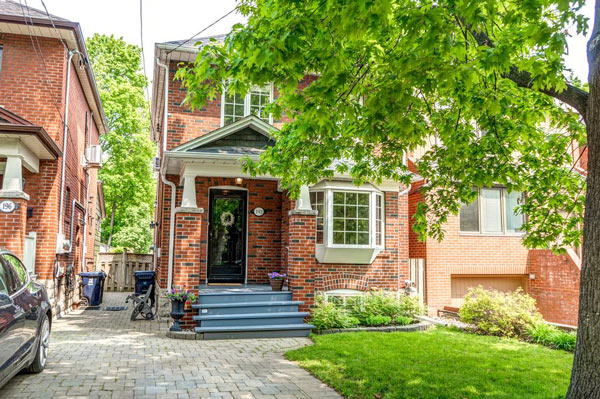
Doing things right starts with choosing the right Realtor. I’m not out for a quick sale so I can collect my commission and move on. My goal is to sell your home for the highest possible price, in the shortest period of time and with as little inconvenience to you as possible.
Selling your home is essentially a four step process – preparation, marketing, negotiation and follow through.
1. Preparing to Sell
There are three parts to the preparation stage: choosing the right time to sell, determining the best list price and getting your home ready for market.
The first thing we do is figure out the right time for you to sell your home. Do you have a fixed moving date because you’ve already bought another home or are you flexible because you care only about getting the highest price? How long will it take you to get your home ready for market? What’s the best time of year to sell? I’ll ask you a lot of questions to make sure I understand your objectives and I’ll listen very carefully to your answers.
The next step is determining the best list price for your home. Your list price influences how many buyers want to see your home, how quickly it sells and its ultimate sale price. It’s crucial to get this right. I’ve seen thousands of homes so I’m always up to date with the market. I’ll provide you with an accurate assessment of the fair market value of your home and explain different pricing strategies to you (i.e. whether to list low and hope for a bidding war or list at a more realistic price).
Third, we’ll talk about getting your home ready for market. Putting your home on the market is like putting on a show. Everything has to be in place when the curtain goes up because you never get a second chance to make a first impression. We’ll discuss what needs to be done, talk about things like staging and pre-inspections, and I’ll put you in touch with great people who will take care of you and make sure your home shows its best.
2. Putting Your Home on the Market
Now that your home is ready, it’s time to hit the market! The MLS system alone will expose your home to the tens of thousands of Realtors now working in the GTA and to all their clients. That’s a lot of targeted buyers! It’ll also be exposed worldwide through sites like realtor.ca.
I’m very hands on when it comes to all your marketing materials. When you hire me, you get me and my high standards. Having seen so many homes, I know what makes your home stand out. And having worked with so many buyers, I know what’s going to capture their imaginations. This knowledge helps me craft persuasive marketing materials.
I’ll keep you informed of absolutely everything that’s going on while your home is on the market. It’s your home and you need to have all the facts at your fingertips.
3. Negotiating Your Deal
When we receive an offer, or multiple offers, the negotiations begin. Won’t it be comforting to know that your Realtor is also a lawyer?
I really enjoy negotiating and have a lot of experience doing it. I’ll give you the same advice I’d give my mother and will try to get you the best deal possible. I’ll always be honest with you and won’t ever pressure you. In fact, there’ll be times when I might advise you to walk away from the negotiations. Basically, you can count on me to do what’s best for YOU.
4. Following Through
My work doesn’t end when the deal is done. I’m with you every step of the way to make sure everything goes smoothly because issues do sometimes arise (I’d be lying if I told you otherwise). I consider you to be a client for life, not just when you’re buying or selling your home, so I’ll always be happy to answer all your questions and help you any way I can, even ten years after you move!
If you’re ready to get started, please reach out to me anytime at either 647-278-1455 or anthony@anthonymalecki.com. If you’re not quite ready to take that step yet and have some questions or just want an idea of how much your home is worth, please let me know. There’s never any pressure with me. We always move at your speed.
Going on the Market
Everything you need to know before your listing goes live
Should You Stage Your Home?
Staging your home before putting it on the market has become common these days, especially because it has been shown to produce superior results. Some people are hesitant to stage their homes because of concerns about the expense and time involved. If this sounds like you, don’t be concerned. Staging has been given different interpretations, but essentially, it means preparing your home for market to make sure it shows its best. It doesn’t necessarily mean renovating your kitchen or bathroom or renting furniture for your entire home. It also doesn’t mean spending tens of thousands of dollars to increase your price by only a few thousand dollars. That wouldn’t make sense, would it? It might only mean de-cluttering, painting a room or two and putting a few things in storage. Some homes look so good that a stager isn’t even required and others won’t benefit from staging at all. A good stager knows the difference and will tell you what’s worth doing and what’s not worth doing so your price increases by more than the amount you invest in staging. A good stager will also be able to help you arrange for whatever staging you decide to undertake yourself (i.e. painters, handymen, movers, furniture storage and rentals, etc.). At the end of the day, staging will usually help your home sell more quickly and for a higher price. We’ll discuss whether or not staging will be of benefit to you and I can recommend a stager to you, but it’s your home so ultimately it will be up to you to decide how much or how little staging you’d like to do.
Should You Do a Pre-Inspection (homes) or Order a Status Certificate (condos)?
In the same way that it might be a good idea to do a pre-inspection if you own a home, it may be a good idea to order a current Status Certificate from your property manager before putting your home on the market if you own a condominium. Since most condo buyers make their offers conditional on obtaining and reviewing a Status Certificate, the benefits of ordering one in advance are similar to those related to doing a pre-inspection.
Documents We’ll Need
Photocopies of the following are sufficient, and if you can’t locate any of them, please let me know because there may be alternate ways of obtaining them.
- Deed or Transfer.
- Survey.
- Lawyer’s reporting letter from when you bought your home.
- Most recent Final Property Tax Bill. (Usually arrives in May, so the most recent one will be the one that arrived last May, even if it was May of last year.)
- Approximate annual gas, hydro, water and oil costs (the easiest ways to determine these is to either add up your bills or call your utility companies and ask them for the figures).
- Key to your home.
- Home Inspection Report if you’ve had one done.
- Receipts or warranties for work done to your home.
- Plans or drawings for renovations.
If you own a condominium, add these to your list
Fortunately, most of these come with the Status Certificate, but if you’re trying to sell your condominium make sure these are on your list:
- Condominium declaration.
- Condominium budget.
- Condominium rules and regulations.
- Name, address and phone number of property management company.
- Status Certificate (which will include all of the above information).
- Amount of maintenance fees and what they include.
Chattels and Fixtures: What Will You Be Taking and What Will You Be Leaving?
Decisions will need to be made about whether or not the sale of your property will include (or exclude) the following:
- Appliances.
- Light fixtures.
- Window coverings.
- Is your hot water tank rented?
- Home entertainment equipment: televisions, wall brackets, projectors, screens, built in speakers, amplifiers, etc.
- Remote controls: for garage doors, air conditioners, stereos, etc.
- Alarm system: Do you own the equipment? Is it a lease to own? Does the alarm company own the equipment and you pay a monthly monitoring fee? Do you have a monitoring contract? Is it month to month or is there an expiry date? When does it expire? How much is the monthly monitoring fee? Can the monitoring contract be assumed by the buyer? Is there a fee for the buyer to assume the contract? Will you have to pay a penalty if you cancel the contract early? (Easiest way to find all this out is to call your alarm company.)
- Is any other equipment leased i.e. your furnace?
- Is there anything attached to your property (usually by screws; hanging on a hook is not considered to be attached) which you would like to take with you i.e. bookshelves, closet organizers, switch plates, wine racks, water filters, swing sets, stained glass, mirrors, etc.?
- Is there anything that is not attached to your property that you’d like to leave behind i.e. the sofa that won’t fit up the stairs, storage units, garden shed, etc.?
Other Information We'll Need
- What’s your ideal closing date? Are you willing to close earlier or later? If so, what are the earliest and latest dates you’d consider in an ideal world?
Is your front pad parking space legal? Do you pay an annual fee to the city for it? - Do you have a street parking permit?
- Which features of your home do you think will be most attractive to potential buyers? Are there any special features that aren’t readily apparent?
- Will you be taking your mortgage with you or paying it off? Is there a penalty for early prepayment?
- If you’re buying first, have you looked into bridge financing in case you need it?
- If you’re selling first, have you looked into rental accommodations in case they’re needed?
- What major improvements have you made to your home and in which years were they completed i.e. kitchen, bathrooms, roof, furnace, air conditioning, wiring, plumbing, additions, waterproofing, swimming pool, landscaping, etc.? Do you have receipts? Did you receive any warranties? Are they transferrable? Was the work done with permits? Have all permits been closed off?
- Do you have any plans or drawings relating to major work done to your home?
Showing Your Home
Let buyers fall in love the moment they walk in
What Showing Times Work Best For You?
Most people have very busy schedules and fit house hunting in amongst their other activities. For this reason, it’s important that your home be as convenient to show as possible. I’ll explain how showings work to you in more detail, but in the meantime, start to think about the following:
- Are there any times of the week or day when you absolutely don’t want your home to be shown? For example, if you have a baby that naps between 1 and 3 every afternoon. (The fewer of these times the better.)
- Do you want advance notice for showings? (Half an hour, an hour, the day before – the less notice the better as some buyers may want to come at the last minute.)
- Will you be staying in your home while it’s on the market or staying somewhere else in town to make it easier to keep your home clean?
- Will you be out of town while your home is on the market?
- If you won’t be staying in your home while it’s on the market, it’s preferable that someone come by in the morning to turn all the lights on and open all the blinds and at night to turn the lights off, close the blinds, pick up the mail and make sure the doors are locked. This could be a relative, a trusted friend, a neighbour, or you if you’re staying somewhere else in town.
What Should You Do During Showings?
Buying a home is an emotional decision. People like to “try on” a home to see if it feels comfortable before they buy. Anything you can do to put them at ease will increase the chances of them buying your home.
- Best thing to do: Be absent during showings, if possible.
- If you can’t be absent, be invisible by staying out of sight and not talking. If you do have to talk, be friendly, but don’t talk about why you’re moving. Talk about the weather and try to avoid any questions about your home so you don’t inadvertently disclose information that could come back to hurt you during negotiations.
- Whenever you leave your home, even if there are no showings scheduled, you should assume that it’ll be shown while you’re away so please make sure the lights are on and the drapes and blinds are open before you leave.
- Turn on the air conditioning (summer) or the heating (winter).
- Play quiet background music.
- For security reasons, please remove or hide all valuables. Also, please don’t allow anyone to show your home unless they’ve made an appointment through my office. I have a special service that allows agents to make appointments 24 hours a day, 7 days a week so it’s very easy for them to do so.
Ready to get started?

Honesty and Integrity Above All Else
Anthony C. Malecki, B.A.
SAGE Real Estate Ltd., Brokerage
2010 Yonge Street, Toronto, ON M4S 1Z9 | Mobile 647-278-1455 | Office 416-483-8000
Anthony C. Malecki, B.A.
SAGE Real Estate Ltd., Brokerage
2010 Yonge Street, Toronto, ON M4S 1Z9
Mobile 647-278-1455 | Office 416-483-8000
Anthony C. Malecki, B.A.
SAGE Real Estate Ltd., Brokerage
2010 Yonge Street, Toronto, ON M4S 1Z9
Mobile 647-278-1455
Office 416-483-8000